
Introduction: The Engineering Behind the Impossible
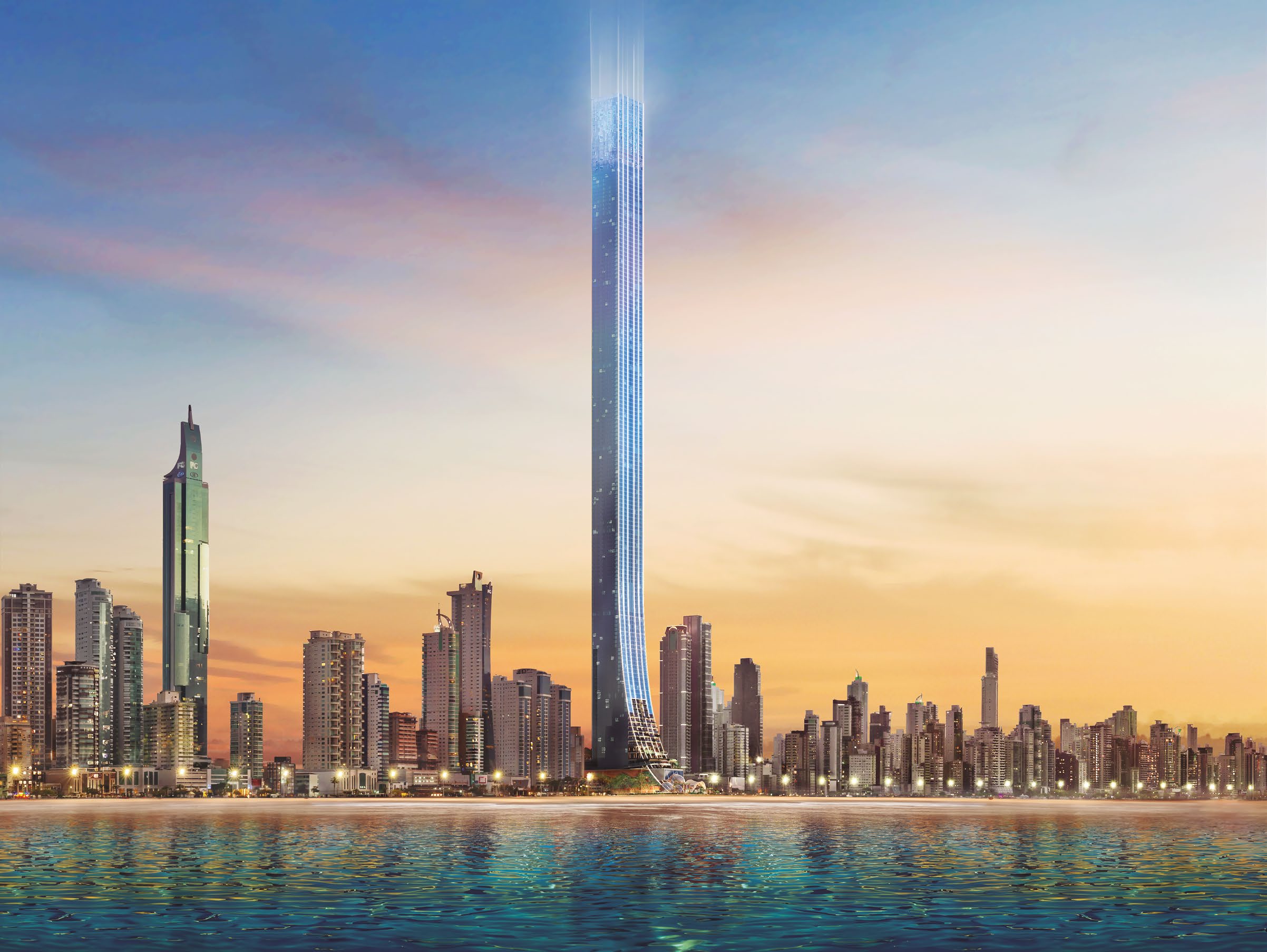
When proposing to build the world’s tallest residential building, more than 500 metres tall and with 154 floors, vision and ambition are not enough—the most advanced technical knowledge available on the planet is required. Senna Tower, located in Balneário Camboriú, is not only an impressive architectural project but a true laboratory of innovation for contemporary civil engineering.
This article explores the revolutionary technologies that make it possible to build this colossal structure, from its deep foundations to the systems that will ensure stability even in extreme winds. We will see how Senna Tower not only uses but also improves and innovates with technological solutions that are redefining what is possible in modern construction.
Would you like to learn first-hand about this revolutionary project’s technological innovations? Contact Manica Marin Imóveis for an exclusive presentation of Senna Tower.
The Fundamental Challenge: Overcoming Gravity
The first and most fundamental challenge for any skyscraper is overcoming the force of gravity. At 154 floors and more than 500 metres tall, Senna Tower faces this challenge on a scale rarely seen in the world—and one that is unprecedented in Brazil.
Innovative Foundations: Auger Cast Piles
The foundation of any building begins with the ground, and in Senna Tower’s case, this element has received special attention. The development uses Auger Cast foundation technology, developed by União Fundações with support from Talls Solutions, which uses piles up to 40 metres deep, embedded 5 metres directly into the rock.
This technology is particularly important given the characteristics of Balneário Camboriú’s soil, which combines sandy areas near the beach with rock formations. Auger Cast piles offer significant advantages:
- Greater stability: Embedding 5 metres into the rock provides exceptional anchoring, essential for a building of this scale.
- Lower environmental impact: Compared with other foundation techniques, the method significantly reduces disturbance to the surrounding soil.
- Optimized load distribution: The pile design allows the structure’s colossal weight to be transferred more efficiently to the underlying ground.
- First supertall-scale implementation in Brazil: This is the country’s first use of this technology in a building over 300 metres tall, representing a significant advance in Brazilian civil engineering.
Real-Time Monitoring
Another innovation in Senna Tower’s foundations is the advanced system of sensors and fibre optics that will monitor foundation behaviour in real time. This technology enables:
- Immediate detection of any abnormal movement in the structure
- Preventive adjustments before potential problems develop
- Collection of valuable data for future large-scale construction
- Additional safety for a structure of this magnitude
The combination of these foundation technologies represents a qualitative leap for Brazilian civil engineering. Companies and specialists from around the world are closely following this implementation, which promises to set new standards for tall buildings in challenging geological conditions.
Taming the Winds: The Tuned Mass Damper (TMD) System
If overcoming gravity is a skyscraper’s first challenge, the second, equally critical one is resisting the lateral force of the wind. At heights above 500 metres, wind currents can exert extreme pressure, capable of causing significant oscillations in the structure.
Latin America’s First TMD
Senna Tower will implement Latin America’s first Tuned Mass Damper (TMD) system, a technology already used in some of the world’s tallest buildings, such as Taipei 101 in Taiwan. The project calls for installing two TMD assemblies of 1,000 tonnes each, strategically located on the 140th floor.
In theory, this system works in an ingeniously simple way, but its implementation is extremely complex:
- Physical principle: A TMD is essentially a huge counterweight that moves opposite to the building’s oscillation, neutralizing unwanted movement.
- Automatic counter-movement: When wind pushes the building in one direction, the TMD automatically moves in the opposite direction, creating a force that stabilizes the structure.
- Kinetic-energy absorption: The system absorbs and dissipates the energy that would cause oscillations, converting it into forms that do not affect occupant comfort.
- Precise tuning: The TMDs are meticulously calibrated to match the building’s natural vibration frequency, maximizing their effectiveness.
Benefits of the TMD System at Senna Tower
Implementing this advanced system brings multiple benefits:
- Exceptional comfort: Residents on the upper floors will barely feel the effects of strong winds, even at extreme heights.
- Greater structural durability: Reduced vibration decreases material fatigue over time, significantly extending the building’s service life.
- Enhanced safety: The TMD provides stability even in extreme weather, such as tropical storms that occasionally reach Brazil’s southern region.
- Technical learning: The pioneering implementation of this technology in Latin America will provide valuable knowledge for future construction across the continent.
A Global Track Record
TMD systems’ effectiveness is not theoretical—it has already been demonstrated in tall buildings around the world. Taipei 101, for example, withstood a magnitude 7.4 earthquake on the Richter scale thanks to its 660-tonne TMD. Senna Tower’s system, with two 1,000-tonne assemblies, promises even greater performance.
The Vertical Revolution: Ultra-High-Speed Elevators
In a 154-floor building, vertical-transport efficiency is as important as the structure itself. Senna Tower will implement an elevator system representing the state of the art in vertical-mobility technology.
Eight High-Performance Elevators
The project will have eight ultra-high-speed elevators, specifically designed to meet the unique demands of a building of this scale. Although the exact speed has not been disclosed, specialists estimate that these elevators will be among the fastest in the world, comparable to systems installed in the Burj Khalifa and Shanghai Tower.
The features of these elevators include:
- Intelligent traffic-management systems: Advanced algorithms that minimize waiting times, even during peak hours.
- Vibration-suppression technology: Ensuring a smooth ride even at extreme speeds.
- Energy efficiency: Regenerative systems that convert braking energy into usable electricity.
- Enhanced safety: Multiple redundant systems to ensure reliable operation in all circumstances.
The Car Elevator
One of Senna Tower’s most talked-about innovations is its exclusive elevator for cars. This system will allow owners of the most exclusive residences to park their vehicles directly inside their apartments.
This technology, which seemed like science fiction a few years ago, involves:
- Precise positioning systems to accommodate vehicles of different sizes
- Automated management of the transition between vertical and horizontal movement
- A load capacity substantially greater than that of conventional elevators
- Safety measures specific to vehicle transport
Delivery Elevator
Complementing the elevator systems, Senna Tower will also have a dedicated delivery elevator, combining convenience and privacy. This dedicated elevator will allow for:
- Receiving goods without interfering with the flow of the main elevators
- Maintaining residents’ privacy during deliveries
- More efficient logistics management for the building as a whole
- Greater security in controlling service-provider access
Residential Automation and Intelligence
A building that incorporates advanced technologies into its structure could not fail to offer them in its residences as well. Senna Tower will implement state-of-the-art home-automation systems in all 228 of its residences.
Integrated Remote Control
The automation systems will allow residents to control various aspects of their homes using mobile devices, including:
- Climate control: Systems that learn residents’ preferences and automatically adjust the temperature for maximum comfort and efficiency.
- Lighting: Full control over lighting, with the option to create personalized scenes for different times of day and activities.
- Security: Remote monitoring and access control, allowing owners to check and manage the security of their residences from anywhere in the world.
- Appliances: Integration with smart appliances, optimizing their operation and minimizing energy consumption.
The Intelligence Behind the Walls
Beyond the individual apartments, the building itself will incorporate intelligent systems into its operations:
- Energy management: Continuous optimization of energy use in common areas, reducing waste and operating costs.
- Integrated security: Facial-recognition and access-control systems ensuring that only residents and authorized visitors can access specific areas.
- Predictive maintenance: Sensors distributed throughout the building that detect potential problems before they become actual failures, enabling preventive maintenance.
- Resource management: Systems that optimize water use, including reuse for gardening and other non-potable applications.
Sustainability: The World’s First LEED Platinum Supertall Residence
At a time when sustainability has ceased to be optional and become imperative, Senna Tower will stand out as the world’s first supertall residential building (over 300 metres) to receive LEED Platinum certification, the highest recognition for sustainable buildings.
Cutting-Edge Green Technologies
To achieve this exceptional standard of sustainability, Senna Tower will implement several eco-friendly technologies:
- Solar energy: Photovoltaic panels integrated into architectural elements, generating part of the energy consumed by the building.
- Water reuse: Advanced systems for collecting and treating rainwater and greywater for reuse in various applications.
- Energy efficiency: From the building envelope to the mechanical systems, everything has been designed to minimize energy consumption.
- Sustainable materials: Careful selection of materials with low environmental impact and, where possible, local or recycled origins.
The Impact of LEED Platinum Certification
Obtaining LEED Platinum certification is not merely a marketing matter—it represents a genuine commitment to sustainable practices that benefit both residents and the environment:
- Reduced carbon footprint: The building is estimated to emit significantly fewer greenhouse gases than similar uncertified structures.
- Resource savings: The combination of efficient technologies will result in substantial water and energy savings over the building’s service life.
- Indoor environmental quality: Residents will enjoy cleaner air, optimized natural light and non-toxic materials, contributing to their well-being.
- An example for the industry: As a pioneer in LEED Platinum certification for supertall residential buildings, Senna Tower will set a new standard for similar future developments.
Aerodynamic Design: Form Follows Function
A fundamental aspect of the technology incorporated into Senna Tower lies in its very design. Inspired by the fluidity and speed that characterized Ayrton Senna on the track, the building’s form is not merely an aesthetic matter but a technical solution to specific challenges.
The Science Behind the Form
Senna Tower’s aerodynamic design was meticulously developed based on extensive wind-tunnel testing and advanced computer simulations:
- Reduced wind pressure: The structure’s curved form significantly decreases wind resistance, reducing the lateral forces exerted on the building.
- Vortex elimination: The specific design prevents the formation of vortices that could cause dangerous rhythmic oscillations.
- Wind-load distribution: The building’s geometry distributes wind pressure more evenly throughout the structure.
- Street-level comfort: The design also considers wind effects at pedestrian level, minimizing uncomfortable drafts around the building’s base.
This approach, in which form is determined not only by aesthetic considerations but also by technical needs, represents the true essence of contemporary tall-building architecture.
International Collaboration: Global Knowledge Applied Locally
A project of this scale and complexity could not be accomplished without the collaboration of international specialists. Senna Tower brings together some of the world’s leading names in structural and geotechnical engineering.
Elite Consultancy
Among the specialists involved in the project are:
- Harry Poulos: A world authority in geotechnical engineering, with extensive experience in foundations for tall buildings, including the Burj Khalifa.
- Fatih Yalniz: A specialist in tall structures and damping systems, with experience in iconic projects around the world.
- Multidisciplinary teams: Brazilian engineers working side by side with international consultants, promoting a valuable exchange of knowledge.
Technology Transfer
This international collaboration goes far beyond simply hiring foreign consultants:
- Training programmes: Brazilian engineers are receiving specific training in the cutting-edge technologies used in the project.
- Documentation and records: The entire design and construction process is being meticulously documented to serve as a reference for future projects.
- Academic partnerships: Brazilian universities are involved in the project, allowing students and researchers to observe and learn from the implementation of these advanced technologies.
- Development of local suppliers: Brazilian companies are being developed to supply specialized components, increasing the technical capacity of the national industry.
This approach ensures that Senna Tower will not be an isolated achievement, but a catalyst for the advancement of Brazilian civil engineering as a whole.
Technological Challenges and Innovative Solutions
Building a structure more than 500 metres tall presents significant technological challenges, many of which have never before been faced in Brazil. Senna Tower is developing innovative solutions for each of these obstacles.
Extreme Natural Forces
In addition to the strong winds already discussed, the building must be prepared for other natural forces:
- Thermal variations: The expansion and contraction of materials due to temperature changes is a critical factor in tall structures. Senna Tower is implementing special expansion joints and materials with compatible thermal-expansion coefficients to address this challenge.
- Atmospheric effects: At great heights, lightning and other atmospheric discharges are real concerns. The building will have an advanced lightning-protection system, with multiple redundant paths to dissipate electrical-discharge energy.
- Bird impact: A rarely discussed but relevant challenge is bird impact at great heights. Senna Tower will implement non-lethal technologies to prevent collisions, protecting both wildlife and the structure.
Communication and Connectivity
In a 154-floor building, ensuring consistent communication and connectivity is a considerable technical challenge:
- Robust network infrastructure: The building will be equipped with a high-capacity fibre-optic network, ensuring next-generation connectivity on every floor.
- Signal-amplification systems: To ensure consistent cellular coverage, the building will incorporate strategically positioned signal amplifiers.
- Redundancy in critical systems: All critical communication systems will have backup, ensuring operation even in the event of failures.
Technology in the Service of Safety
In a development of this scale, safety is a primary concern. Senna Tower will implement advanced technologies to protect its residents and the structure itself.
Fire Prevention and Suppression Systems
The building will have one of the most advanced fire-prevention and fire-suppression systems ever implemented in Brazil:
- Early detection: Highly sensitive sensors capable of detecting the formation of smoke and gases even before flames develop.
- Intelligent compartmentalization: The building is designed with safety zones that can be automatically isolated in an emergency.
- Stairwell pressurization: A system that keeps emergency stairwells smoke-free, ensuring safe escape routes.
- Automated suppression systems: State-of-the-art sprinklers capable of directing water or other suppression agents exactly where needed.
- Emergency elevators: Unlike conventional buildings, Senna Tower will have special elevators for the exclusive use of firefighters during emergencies.
Structural Safety
In addition to the technologies already discussed, such as the TMD and advanced foundations, Senna Tower’s structural safety incorporates:
- Structural redundancy: The building is designed so that, even if a structural component fails, multiple alternative load paths preserve the integrity of the whole.
- Continuous monitoring: Sensors at critical points will continuously monitor structural performance and flag any abnormal behaviour.
- Advanced materials: The use of ultra-high-strength concrete and special metal alloys in critical elements provides higher safety margins.
The Future of Construction Technology in Brazil
Senna Tower represents not only an architectural landmark but a watershed moment for Brazilian construction technology. Its legacy will include:
- Establishing new standards: The solutions developed for Senna Tower will become references for future large-scale projects in Brazil.
- Workforce qualification: The project is training a new generation of professionals with expertise in advanced construction technologies.
- Supplier development: Demand for specialized materials and components is stimulating the development of a high-technology supplier ecosystem in the country.
- International repositioning: The success of this development will position Brazil as a relevant player in the global market for next-generation skyscrapers.
Conclusion: The Technology Redefining Brazil’s Skyline
Senna Tower represents the state of the art in construction technology, not only for Brazil but for the world. The innovations implemented in this revolutionary project set new standards for what is possible in civil engineering and tall-building architecture.
Just as Ayrton Senna revolutionized motorsport through his relentless pursuit of technical perfection, the skyscraper bearing his name is redefining construction paradigms, combining Brazilian ingenuity with the world’s most advanced technologies.
When completed, Senna Tower will not only be the world’s tallest residential building—it will be a testament to what can be achieved when cutting-edge technology, ambitious vision and technical expertise come together in a truly transformative project. A monument not only to a national idol, but to humanity’s ability to turn seemingly impossible dreams into concrete reality, touching the sky from Brazilian soil.
Would you like to be part of this technological revolution? Visit Manica Marin Imóveis’ Senna Tower page or contact us on WhatsApp at +55 47 98435-5444 or by email at mauricio@manicamarin.com.br to schedule an in-person presentation and learn how to secure a residence in this engineering landmark.
This article is part of a special series about Senna Tower. Be sure to read our articles about the story behind the project and the unique experience of living in this architectural icon.